
Benefits for Individuals
- Engaging video-based content
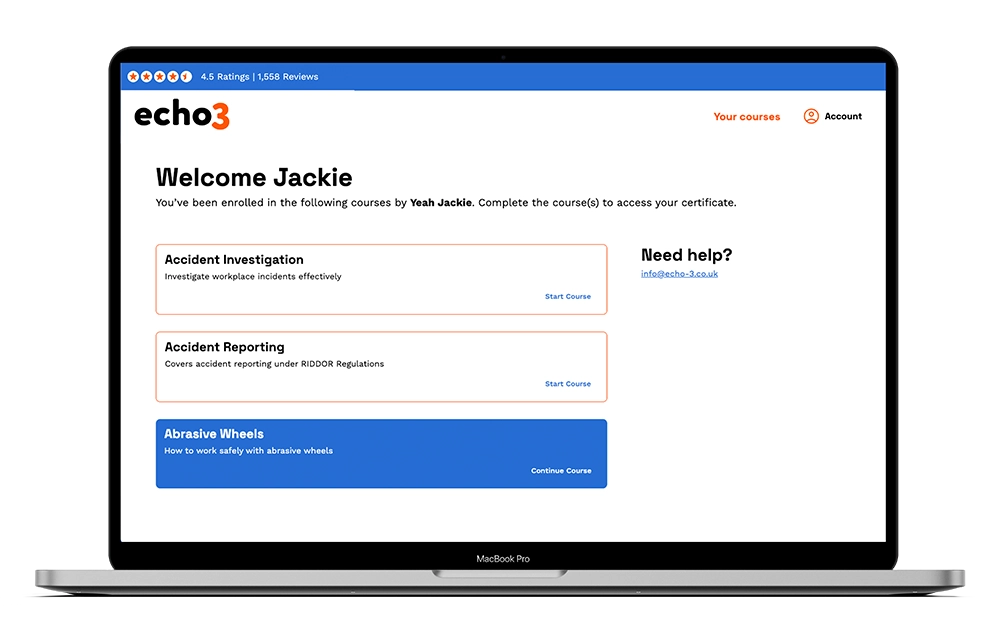
- Learner dashboard included
- Instant access after payment
- Free course retakes
- Shareable digital certificate

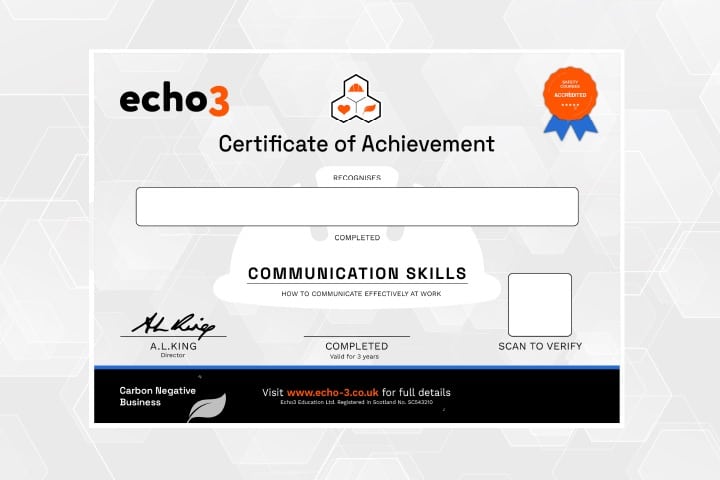
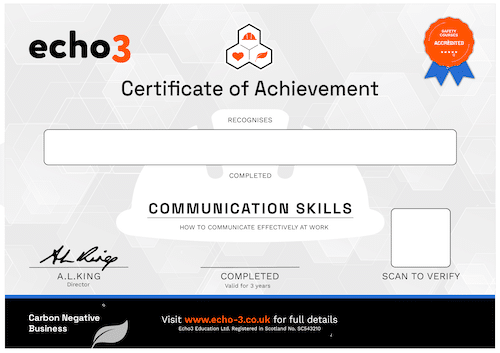
Online Communication Skills course for everyone wishing to improve workplace communication. CPD accredited training with certificate emailed on successful completion.

The Echo3 Communication Skills Course Online is a fully flexible eLearning programme designed to help learners develop essential workplace communication skills. This online training course improves confidence in both verbal and written communication, enabling employees to communicate clearly, professionally, and effectively across a wide range of business situations.
Strong communication is a fundamental workplace skill that supports teamwork, reduces misunderstandings, and improves overall productivity. Whether communicating face-to-face, in meetings, over the phone, or through professional emails, effective communication helps build stronger working relationships and enhances collaboration across teams.
This online communication skills training course explores the key principles of effective workplace communication and how they are applied in real-world situations. Learners will develop an understanding of verbal and non-verbal communication, including the importance of tone, body language, and active listening. The course also explains how to structure clear and professional messages, improve confidence when communicating at work, and adapt communication style for different audiences and scenarios such as meetings, emails, and presentations.
By the end of the course, learners will have practical techniques to communicate with greater clarity, confidence, and impact in everyday professional environments.
Effective communication is essential for workplace success. Employees who communicate well are able to share information more clearly, work more efficiently with colleagues, and improve the quality of customer interactions. Strong communication skills also help reduce workplace misunderstandings, improve decision-making, and increase overall productivity.
In addition, confident communicators are better equipped to handle difficult conversations, resolve conflict, and contribute positively to workplace culture. As a result, communication training plays a key role in developing stronger, more collaborative, and more effective teams.
The Communication Skills Course Online is suitable for employees at all levels, including managers, supervisors, customer service teams, administrative staff, remote workers, and individuals who want to improve their workplace communication skills. It is particularly beneficial for organisations looking to enhance teamwork, leadership communication, customer engagement, and overall professionalism across their workforce.
This communication skills training course is delivered entirely online, giving learners the flexibility to complete training at any time, from any location, and on any device. The self-paced format allows learners to progress at a speed that suits their schedule, making it ideal for busy professionals and workplace teams.
The course includes engaging motion-graphic video content designed to improve understanding, increase engagement, and support long-term knowledge retention.
Communication is one of the most important skills in any workplace. Strong communication enables employees to share information accurately, collaborate more effectively, and build stronger professional relationships. It also reduces the risk of errors, improves customer service, and supports better decision-making across teams.
Developing communication skills contributes directly to improved workplace performance, increased confidence, and a more positive organisational culture.
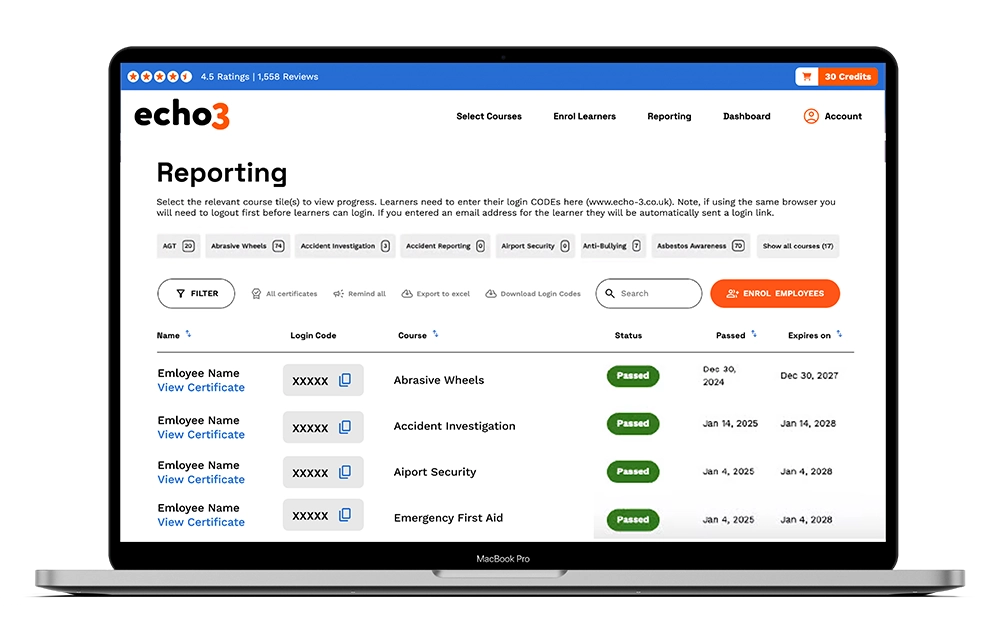
Echo3 provides flexible, scalable online training designed for modern organisations. Employers can enrol staff quickly, monitor learner progress in real time, and manage workforce development through a simple and centralised platform.
This course can also be combined with Delegation Skills, Risk Assessment and Health & Safety for Managers to create a complete professional development programme. All Echo3 courses are available through Echo3 Credit, making training scalable, cost-effective, and simple to manage.
At Echo3 we design our courses around how people actually learn. The content is concise, free from unnecessary repetition, and supported by motion graphics to help explain key concepts. This enables workers to train efficiently, stay engaged, and ultimately stay safe at work.
On completion of this online Communication Skills training you will know;
Everyone who must communicate with colleagues, customers, various stakeholders or the public will benefit from this short online communication skills course.
Verbal communication refers to the words we choose.
Our choice of words has tremendous power in the type of atmosphere that is created in the workplace.
Words that are critical, blaming, judgmental or accusatory tend to create a resistant and defensive mindset that is not conducive to constructive problem solving. On the other hand, we can choose words that normalise the issues and problems and reduce resistance. Phrases such as, ‘it is not uncommon for… ‘ or ‘for some people in similar situations’ are examples of this.
Sending effective messages also requires that we state our point of view as briefly and succinctly as possible.
Listening to a rambling, disorganised speaker is tedious and discouraging – why continue to listen when there is no interchange? Lengthy dissertations and circuitous explanations are confusing to the listener and the message loses its relevance, and impact.
Nonverbal communication refers to body language. Such as our posture, gestures, facial expression and spatial distance. Through our body language we are always communicating, whether we intent to or not!
Nonverbal messages are the primary way that we communicate emotions, for example;
It is estimated that around 55% of what is perceived and understood by others is communicated by our nonverbal messages.
This online communication skills training highlights the importance of listening When we listen we gain information that is valuable for understanding our colleagues perceptions and resolving problems.
When we have a deeper understanding of our colleague’s perceptions, whether we agree with it or not, we hold the key to understanding that person’s motivation, attitude, and behaviour.
The understanding derived through listening enables managers to make better decisions.
So why don’t we all listen more? Because listening can be difficult and often, we subconsciously worry that if we listen attentively to someone we disagree with, we are inadvertently sending a message of agreement.
Effective listening requires;



 Guaranteed Safe & Secure checkout managed by Stripe & Paypal








Have any questions about our training or services?
Email us at info@echo-3.co.uk today!
Get in touch