

Benefits for Individuals
- Engaging video-based content
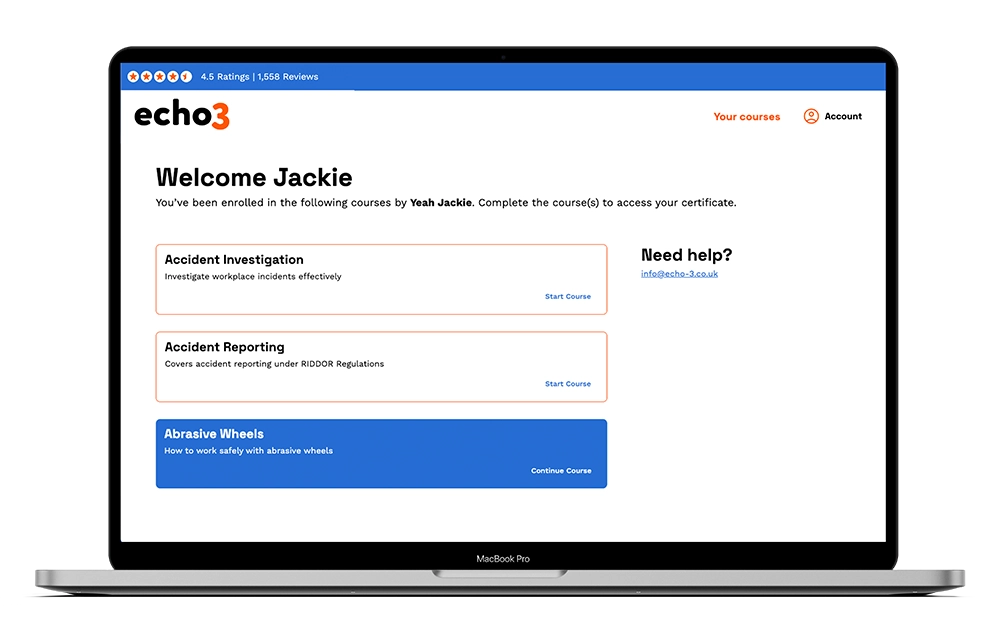
- Learner dashboard included
- Instant access after payment
- Free course retakes
- Shareable digital certificate

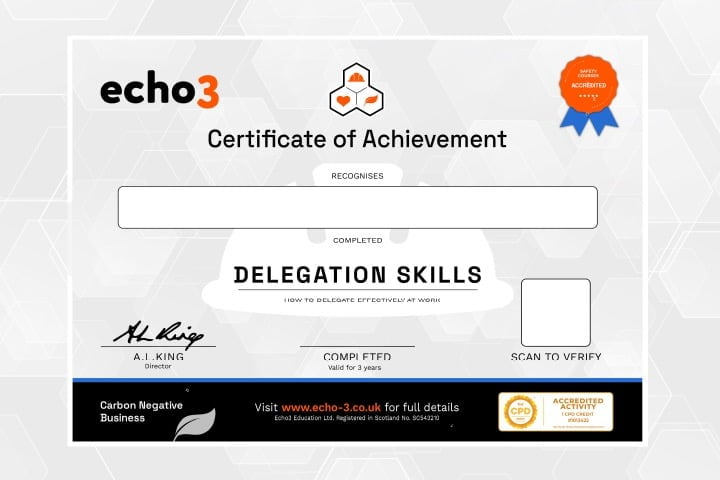

The Echo3 online Delegation Skills course is leadership and management training designed to help managers and supervisors delegate tasks effectively. It teaches learners how to assign responsibilities, improve team performance, increase productivity, and develop employee confidence.


The Echo3 Delegation Skills Course Online provides managers, supervisors, and team leaders with the knowledge and practical techniques needed to delegate effectively in the workplace. This fully online training course helps learners understand how successful delegation improves team performance, increases productivity, and supports employee development.
Effective delegation is a key leadership skill that allows managers to distribute tasks efficiently, build trust within teams, and focus on higher-value responsibilities. This Delegation Skills training course explains how to identify the right tasks to delegate, choose the right people, and communicate expectations clearly to achieve better business outcomes.
Learners will also explore the common barriers to delegation, how to avoid micromanagement, and how strong delegation skills can improve morale, confidence, accountability, and overall workplace performance.
Delivered fully online, the course allows learners to complete training at their own pace from any location. On successful completion, learners receive a CPD-accredited Delegation Skills certificate, emailed directly and securely stored online for future access.
As Andrew Carnegie famously said, “The secret to success lies not in doing your own work, but in recognising the right person to do it.”
Strong delegation skills are essential for effective leadership and business success. Delegating tasks correctly helps managers improve efficiency, develop team members, reduce workload pressure, and increase productivity across the organisation.
Effective delegation also supports employee engagement by giving staff greater responsibility, encouraging professional development, and building confidence within teams.
This online Delegation Skills course is suitable for managers, supervisors, team leaders, business owners, and anyone responsible for managing people or workloads within an organisation.
It is ideal for both new and experienced leaders looking to improve communication, leadership effectiveness, and team performance.
On successful completion, learners receive a CPD-accredited Delegation Skills certificate that can be used for professional development records, management training, and workplace learning documentation.
Certificates are issued digitally for immediate access and secure online storage.

This Delegation Skills training course is delivered fully online and can be completed anytime, anywhere, and on any device. The flexible format allows learners to progress at their own pace and fit training around work commitments.
Learners who successfully complete the course receive a CPD-accredited certificate as evidence of completed leadership and management training. This helps organisations support staff development and demonstrate ongoing investment in leadership skills.
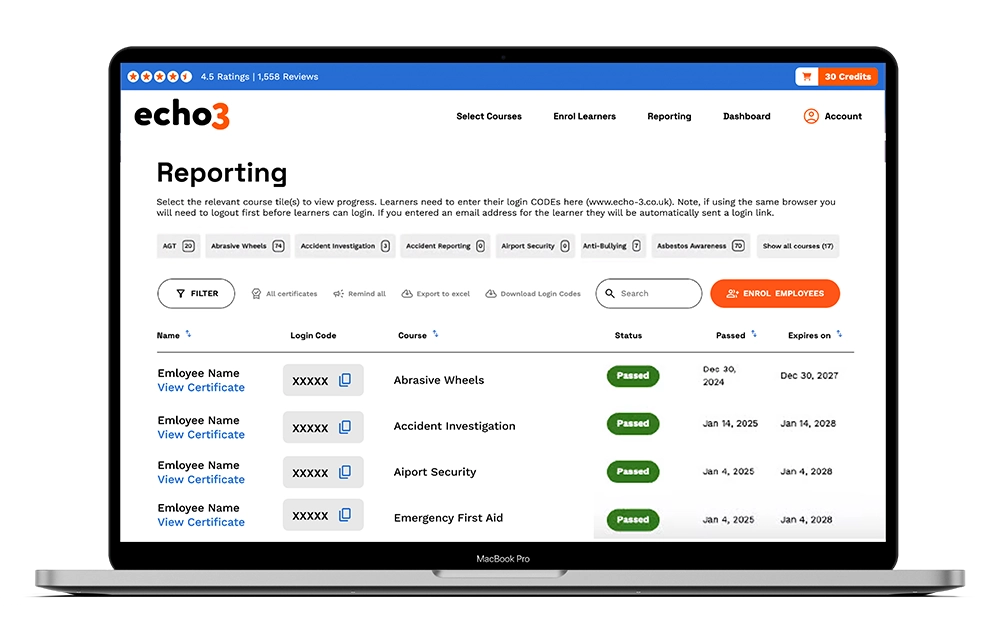
Echo3 delivers flexible online leadership and management training designed for modern organisations. Employers can enrol learners quickly, monitor progress in real time, and manage staff development through one easy-to-use platform.
This course can also be combined with Communication Skills, Health and Safety for Managers, Risk Assessment and Fire Marshal to create a complete professional development programme. All Echo3 courses are available through Echo3 Credit, making training scalable, cost-effective, and simple to manage.

A CPD accredited certificate, emailed the moment you pass. Employers, agencies and auditors scan the QR code to check it on the spot.
Last updated January 2026.
Get Certified · £12.00 + VATAt Echo3 we design our courses around how people actually learn. The content is concise, free from unnecessary repetition, and supported by motion graphics to help explain key concepts. This enables workers to train efficiently, stay engaged, and ultimately stay safe at work.

A Delegation Skills course is leadership and management training designed to help managers and supervisors delegate tasks effectively. It teaches learners how to assign responsibilities, improve team performance, increase productivity, and develop employee confidence.
Effective delegation skills help managers improve efficiency, reduce workload pressure, and focus on higher-priority responsibilities. Delegation also supports staff development, improves morale, and encourages accountability within teams.
This online Delegation Skills course is suitable for managers, supervisors, team leaders, business owners, and anyone responsible for managing people or workloads within an organisation.
The course covers key delegation techniques including identifying tasks to delegate, selecting the right person for the task, setting clear expectations, improving communication, avoiding micromanagement, and monitoring progress effectively.
Yes, the Echo3 Delegation Skills Course Online is delivered fully online, allowing learners to complete training anytime and from any location at their own pace.
Yes, this Delegation Skills training course is fully CPD accredited. Learners receive a CPD-accredited certificate on successful completion.
Yes, learners receive a CPD-accredited Delegation Skills certificate which is emailed directly after successful completion and securely stored online for future access.
Effective delegation improves team performance by distributing workloads fairly, increasing accountability, building employee confidence, and allowing managers to focus on strategic responsibilities. Strong delegation also helps improve communication and productivity across teams.
Delegation training for managers helps improve leadership skills, decision-making, time management, communication, and team development. It also helps managers build trust within teams and improve workplace efficiency.
Yes, this online Delegation Skills course supports ongoing leadership and management development and can be used as part of workplace training and professional development programmes.



 Guaranteed Safe & Secure checkout managed by Stripe & Paypal


Have any questions about our training or services?
Email us at info@echo-3.co.uk today!
Get in touch