

Benefits for Individuals
- Engaging video-based content
- Learner dashboard included
- Instant access after payment
- Free course retakes
- Shareable digital certificate
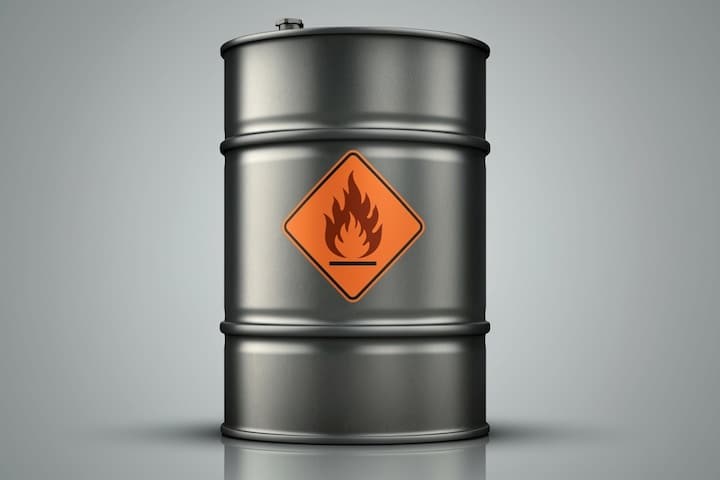
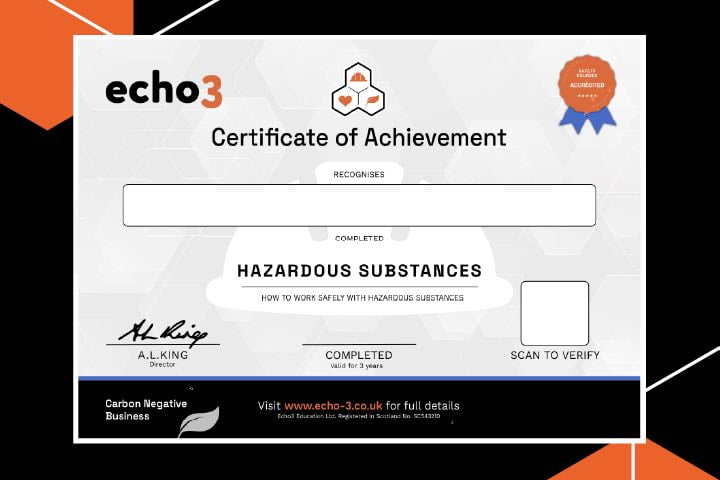





This online Hazardous Substances training course is beneficial for all staff working where hazardous substances are present. A hazardous substance is defined under the COSHH regulation as ‘any substances that are potentially harmful to health’.
Where present, COSHH regulations require employers to establish appropriate ‘control measures’ to keep staff safe. A key control measure is training.
This online Hazardous Substances training course provides the knowledge staff need to keep themselves and colleagues safe.
When hazardous substances are being transported, they are referred to as Dangerous Goods.
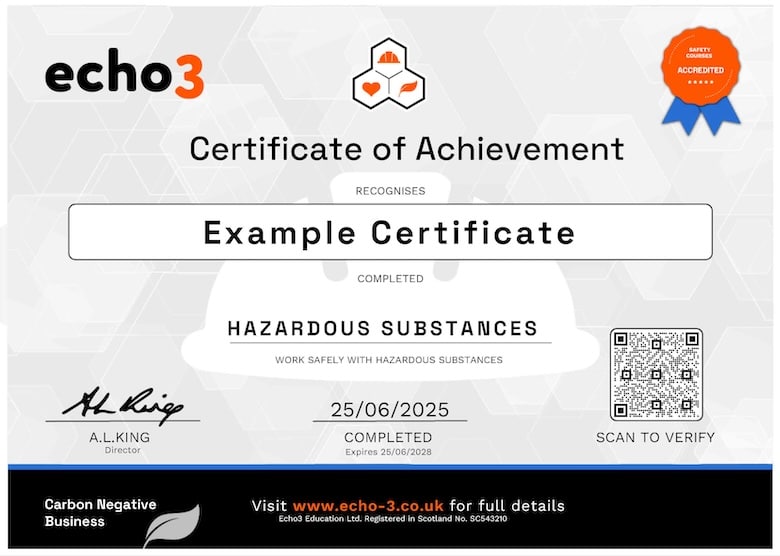
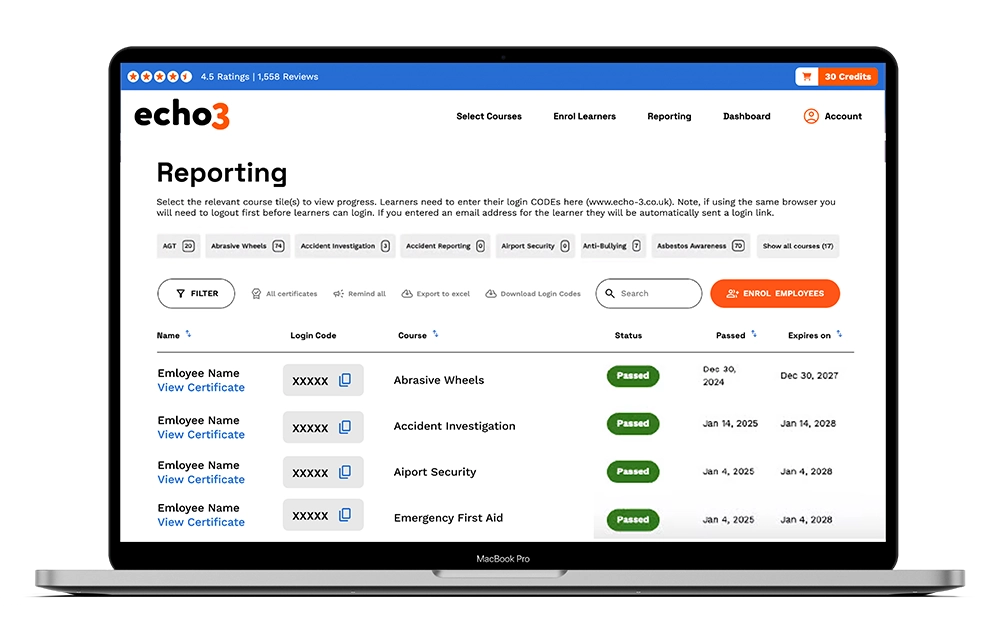
A CPD accredited certificate, emailed the moment you pass. Employers, agencies and auditors scan the QR code to check it on the spot.
Written in accordance with the Control of Substances Hazardous to Health Regulations 2002 (COSHH). Last updated June 2023.
Get Certified · £15.00 + VATAt Echo3 we design our courses around how people actually learn. The content is concise, free from unnecessary repetition, and supported by motion graphics to help explain key concepts. This enables workers to train efficiently, stay engaged, and ultimately stay safe at work.

 The learning objectives from the Echo3 online hazardous substances course include.
Provide a comprehensive understanding of different hazardous materials, their classifications, and the potential risks they pose in common workplace settings.
Firstly, provide staff with an understanding of the risks they face is a fundamental step in creating a safe workplace. This includes recognizing symbols, labels, and safety data sheets (SDS). Learners will also gain an understanding of their legal obligations and hazardous substances regulations.
Secondly, educate proper handling, storage, and disposal techniques for hazardous substances. This includes recognising the symbols, labels from the Globalised System from the Classification and Labelling of chemicals. Learning will also understand the purpose of safety data sheets (SDS).
Thirdly, emphasise safety protocols and preventive measures to minimise risks and accidents. This includes the importance of personal protective equipment (PPE), spill responses and understanding general emergency response procedures.
Ultimately, the course aims to empower individuals with the knowledge necessary to identify, handle, and mitigate risks associated with hazardous materials thereby making your workplace safer.
 Several job roles inherently involve exposure to hazardous substances, necessitating appropriate hazardous substances training. These roles include but are not limited to:
Healthcare Professionals. Nurses, doctors, and lab technicians dealing with potentially harmful pharmaceuticals and medical chemicals.
Cleaners. Worker who use bleach or other chemicals to clean or disinfect. They could also potentially come into contact with sharps and bloodborne pathogens.
Construction Workers. Those handling paints, solvents, asbestos, and other construction-related chemicals.
Manufacturing Personnel. Workers involved in production processes using chemicals or substances with associated risks.
Laboratory Technicians/Researchers. Individuals dealing with various chemicals and laboratory materials.
Waste Management Personnel. Workers handling hazardous waste disposal.
Transportation Workers. Those handling, shipping, or transporting hazardous materials, including truck drivers and logistics personnel.
And, any individuals directly involved in handling, mixing, or transporting chemicals.
Note, when hazardous substances are being transported, they are referred to as Dangerous Goods.
A hazardous substance is a substance or mixture of substances that are potentially harmful to health. Hazardous substances can take many forms and include:
Virtually all workplaces use or contain hazardous substances of some kind. Some examples of hazardous substances include:
The 9 hazard warning symbols are used on packaging and containers to standardise and make clear the hazards posed substances.
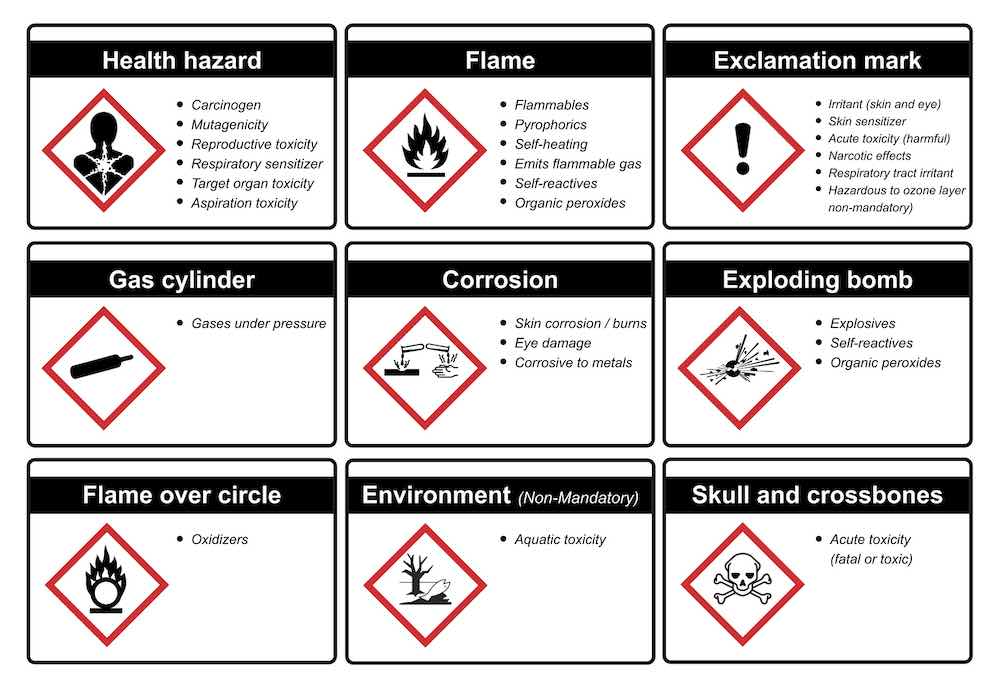
What parts of the body can hazardous substances affect? The effect obviously depends on the specific substance and how it entered the body. Some typically effects are;
Brain & nervous system – Exposure to hazardous substances can affect the brain causing confusion, delirium and unconsciousness. Unusually high levels or prolonged exposure can, depending on the substance, interrupt the nervous system causing a variety of conditions such as seizures, drowsiness and numbness of the hands and feet.
Mouth – Swallowing hazardous substances can burn lips, mouth and food passages.
Eyes – Eyes are very sensitive organs and easily damaged. Exposure to hazardous substances can cause chemical burns, dryness and irritation.
Blood – Once in the body, hazardous substances may penetrate the bloodstream causing damage to tissues and vital organs of the body.
Skin – Certain hazardous substances such as corrosives may be absorbed through the skin and cause burns. Solvents and detergents may cause dermatitis.
Lungs – Exposure to certain hazardous substances can cause severe respiratory distress and a variety of lung diseases from asthma to cancer.
Heart – Exposure to hazardous substances can disturb the action or rhythm of the heart.
Liver/kidneys – The liver and kidneys can sustain damage as they struggle to filter the hazardous substance.
Digestive system – Hazardous substances in the digestive system can cause vomiting, abdominal pain and diarrhoea.






 Guaranteed Safe & Secure checkout managed by Stripe & Paypal








Have any questions about our training or services?
Email us at info@echo-3.co.uk today!
Get in touch