
Benefits for Individuals
- Engaging video-based content
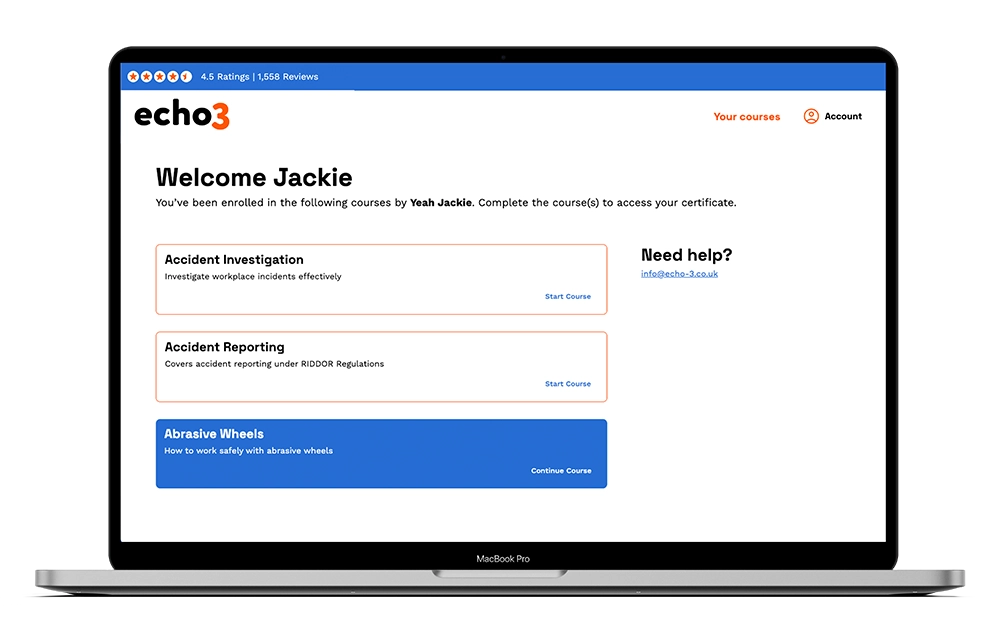
- Learner dashboard included
- Instant access after payment
- Free course retakes
- Shareable digital certificate





The Echo3 online Noise Awareness course teaches workers how to recognise noise hazards, understand the legal exposure limits, and protect their hearing at work.
Noise-induced hearing loss (NIHL) occurs when prolonged or intense noise damages the sensitive hair cells in the inner ear. Once these cells are damaged, they do not recover: the hearing loss is permanent. Harmful noise levels are common in construction, manufacturing, engineering, warehousing and any environment where heavy machinery, power tools or repetitive impact processes are in use. The legal threshold is a daily or weekly average of 80 decibels, the point at which employers must act.
Trained workers understand the warning signs of excessive noise exposure, know when and how to use hearing protection, and can identify situations that require further assessment. Employers get documented proof that staff have received structured noise awareness training as required by law.
Noise-induced hearing loss is one of the most common occupational health conditions in the UK, particularly in construction, manufacturing and heavy engineering.
According to the Health and Safety Executive, an estimated 15,000 workers each year suffer from hearing problems caused or made worse by work, based on Labour Force Survey data averaged over 2022/23 to 2024/25. The HSE also estimates that over two million workers across Great Britain are regularly exposed to noise levels that could damage their hearing.
Employers who fail to assess noise risks and provide appropriate training face HSE enforcement action, improvement notices, prosecution under noise regulations, and civil claims for occupational hearing loss.
Employers have a specific legal duty to assess and control noise exposure in the workplace, and to provide training where exposure reaches the action levels.
The Echo3 Noise Awareness course is written in compliance with the Control of Noise at Work Regulations 2005. Every completion is stored in the Echo3 LMS, giving managers a clear record for compliance checks and HSE inspections.
This course is for anyone whose work exposes them to noise levels at or above the lower exposure action value of 80 decibels.
It suits new starters entering noisy work environments, experienced workers renewing a three-year certificate, and organisations documenting compliance with noise regulations. Workers who also need guidance on selecting and using protective equipment should consider the PPE course alongside this one.
The Echo3 Noise Awareness course is accredited by the CPD Group. The certificate supports workplace compliance audits, HSE inspections, client procurement checks and documented evidence that staff have received training under the Control of Noise at Work Regulations 2005.

Video-led modules covering: understanding noise at work and the relevant regulations, safe noise levels and exposure action values, and appropriate control measures including hearing protection; each with interactive knowledge checks. Self-paced, accessible on any device. Most learners complete in approximately 35 minutes.
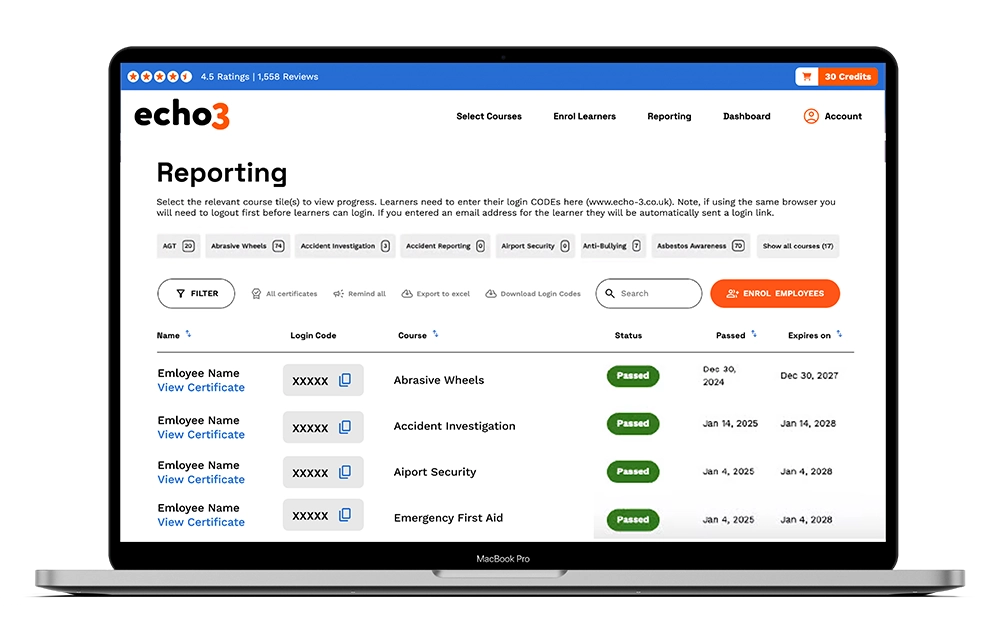
On passing, learners receive a QR code-protected, CPD-accredited certificate, valid for three years. All records are stored in the Echo3 LMS for employer access during audits and compliance reviews.
Echo3 delivers fully online safety training with learner tracking, certification management, and compliance records, all from one dashboard. Combine this course with Echo3’s PPE, Risk Assessment, COSHH Awareness and Health & Safety for Managers courses for a structured approach to workplace hazard management.
Investing in Noise Awareness training protects workers from irreversible hearing damage, reduces employer liability, and gives organisations documented proof of compliance with noise regulations.
Accredited. Practical. Delivered in under an hour.

At Echo3 we design our courses around how people actually learn. The content is concise, free from unnecessary repetition, and supported by motion graphics to help explain key concepts. This enables workers to train efficiently, stay engaged, and ultimately stay safe at work.

Online noise awareness training teaches workers how to identify noise hazards, understand legal exposure limits, and protect their hearing in the workplace. It helps employers meet requirements under the Control of Noise at Work Regulations 2005.
Anyone exposed to workplace noise at or above 80 decibels should take noise awareness training. This includes construction workers, engineers, manufacturing staff, warehouse operatives, and site managers.
The onset of hearing damage can occur when the sustained noise level reaches 85 decibels or more.
Most people will suffer some degree of deafness when they are exposed to Noise levels of 85 decibels and above for a sustained period.
UK Noise regulations set 2 thresholds where employers must act on noise.
80 decibels and above – If the daily or weekly average noise exposure level is 80 decibels or more, employers must undertake a noise risk assessment and provide staff with appropriate training or information. This is a requirement of noise regulations.
85 Decibels and above – When the average volume hits 85 decibels or more staff must wear appropriate ear protection.
This is also a requirement of noise regulations.
Noise-induced hearing loss (NIHL) is permanent damage caused by prolonged exposure to loud noise. It occurs when inner ear hair cells are damaged and cannot recover.
Noise awareness training helps prevent hearing loss, ensures legal compliance, and reduces the risk of enforcement action or compensation claims. It also supports safer working environments.
Most learners complete the course in approximately 35 minutes. It is fully online and self-paced.
Yes, the course is CPD accredited and provides a recognised certificate that supports compliance audits and inspections.
Learners receive a CPD-accredited certificate with QR code verification. It is typically valid for three years and stored digitally for employer access.
The course covers noise hazards, exposure limits, legal responsibilities, hearing protection, and control measures to reduce risk in the workplace.
Industries such as construction, manufacturing, engineering, warehousing, and logistics commonly require noise awareness training due to high noise levels.
Failure to comply with noise regulations can lead to enforcement action, fines, prosecution, and civil claims for hearing damage.






 Guaranteed Safe & Secure checkout managed by Stripe & Paypal








Have any questions about our training or services?
Email us at info@echo-3.co.uk today!
Get in touch