
Benefits for Individuals
- Engaging video-based content
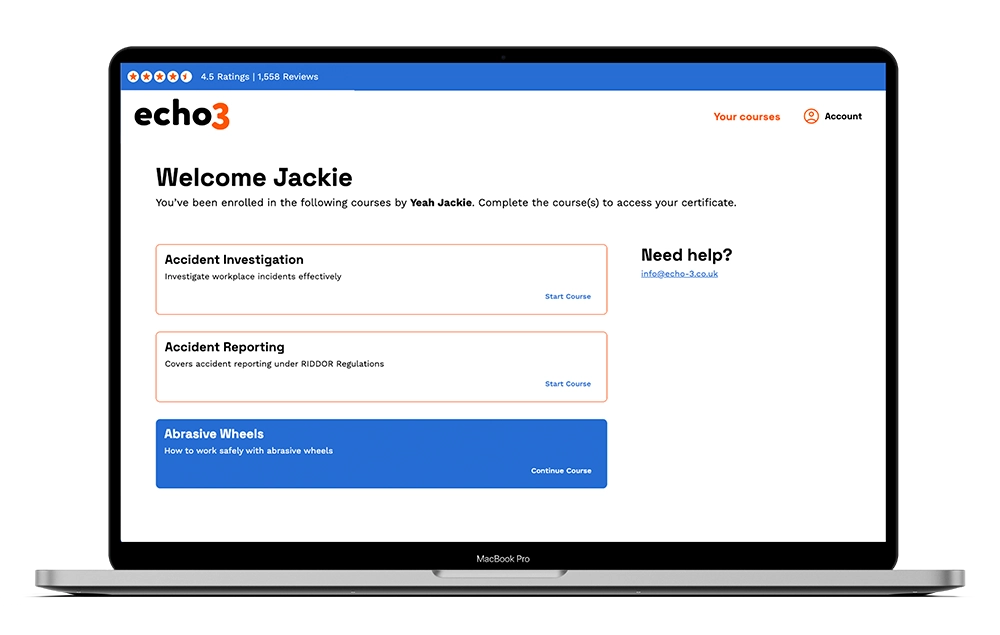
- Learner dashboard included
- Instant access after payment
- Free course retakes
- Shareable digital certificate

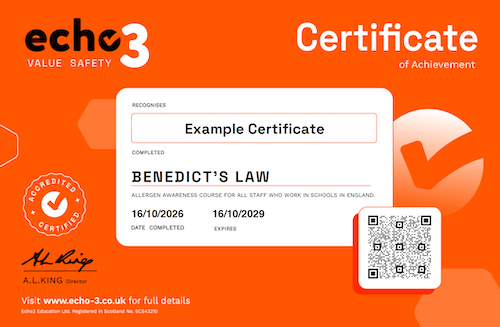
The Echo3 Benedict’s Law Awareness Course is a fully online training programme designed to provide employees and organisations with a clear understanding of Benedict’s Law and the legal responsibilities it creates. The course explains the key principles of the legislation in an accessible and practical way, helping learners understand what the law means and how it may affect their responsibilities at work.
The course is designed for employees, supervisors, managers, and other individuals who need to understand their legal responsibilities and the importance of following appropriate procedures. It provides practical guidance to help learners recognise relevant situations, understand their responsibilities, and take appropriate action when concerns arise.
Understanding Benedict’s Law is important for organisations that need to ensure their employees are aware of the legal requirements relevant to their role. The training helps learners understand the potential consequences of failing to follow the law and the importance of maintaining appropriate standards, procedures, and records.
Learners will develop a clear understanding of the key requirements of Benedict’s Law, individual and organisational responsibilities, appropriate workplace procedures, reporting requirements, and practical steps that can help organisations meet their legal obligations.
Effective Benedict’s Law Awareness training helps employees understand their legal responsibilities and recognise how the legislation applies to their everyday work. Improving awareness can help organisations reduce risk, encourage responsible decision-making, and ensure employees know what is expected of them.
Providing appropriate legal awareness training also helps create a more informed and compliant workforce. Employees who understand their responsibilities are better placed to follow organisational procedures, identify potential issues and raise concerns appropriately.
Organisations have a responsibility to ensure that employees understand the legislation and legal requirements relevant to their roles. Depending on the organisation and the nature of the work being carried out, this may include providing appropriate information, instruction and training.
This online Benedict’s Law Awareness Course supports organisations by providing employees with accessible training covering the key principles, responsibilities and practical requirements associated with Benedict’s Law.
This online Benedict’s Law Awareness Course is suitable for employees, supervisors, managers and other individuals who need an understanding of Benedict’s Law as part of their role. It can be used by organisations to provide consistent legal awareness training across their workforce and to help employees understand the responsibilities that apply to them.
The course is suitable for organisations of different sizes and can be completed online, making it particularly useful for businesses that need a flexible way to train multiple employees.
Learners complete the Benedict’s Law Awareness Course online at their own pace. The training explains the key areas of the legislation in clear, straightforward language and focuses on practical understanding rather than unnecessary legal terminology.
On successful completion, learners receive a Benedict’s Law Awareness certificate, providing a record that the individual has completed the training.
Echo3 provides modern, flexible online compliance training designed to make workplace training simple and accessible. Employees can complete the Benedict’s Law course from any internet-connected device, allowing organisations to train staff without the need for classroom-based sessions.
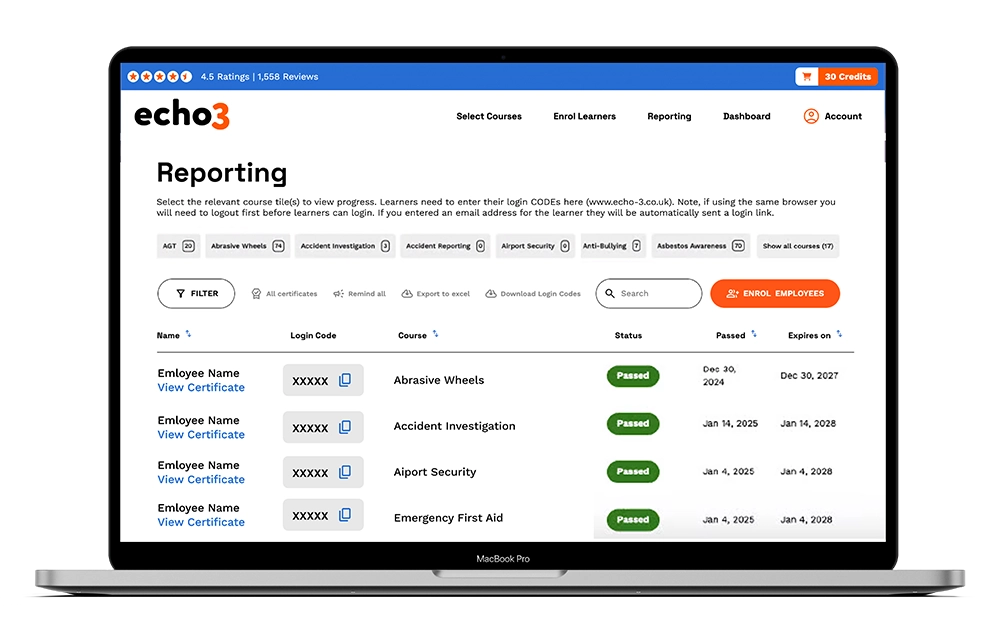
Employers can enrol learners, monitor progress and manage training records through the Echo3 LMS, making it easier to maintain a consistent approach to employee training and compliance.
The Benedict’s Law course can also be combined with other Echo3 workplace compliance, health and safety, and employee training courses to create a broader training programme tailored to the needs of your organisation.
At Echo3 we design our courses around how people actually learn. The content is concise, free from unnecessary repetition, and supported by motion graphics to help explain key concepts. This enables workers to train efficiently, stay engaged, and ultimately stay safe at work.

Benedict’s Law is the commonly used name for new allergy-safety measures designed to improve the protection of children with allergies in schools across England. The Department for Education’s Allergy safety in schools statutory guidance sets out requirements covering allergy safety policies, staff training, Individual Healthcare Plans (IHPs), emergency procedures and the management of adrenaline auto-injectors (AAIs).
The new allergy safety requirements apply from September 2026 for schools in England. The Department for Education published its Allergy safety in schools statutory guidance in July 2026, setting out what schools must do to support pupils with allergies.
The allergy safety requirements apply to schools in England, including local-authority-maintained schools, academies, free schools, alternative provision academies and pupil referral units. The statutory guidance also explains how the requirements relate to independent schools and non-maintained special schools. Scotland, Wales and Northern Ireland have separate arrangements.
Yes. Allergy awareness and anaphylaxis training is an important part of the new school allergy safety requirements. Training is intended to help staff recognise allergic reactions, understand the risks associated with allergies and know how to respond in an emergency. This includes teaching staff, non-teaching staff and catering personnel.
Anaphylaxis is a serious and potentially life-threatening allergic reaction that can develop rapidly and requires emergency treatment. Symptoms can include swelling of the lips, tongue or throat, difficulty breathing, dizziness, fainting, changes in circulation and other sudden airway, breathing or circulation problems. Recognising the signs of anaphylaxis quickly can help staff follow the school’s emergency procedures without delay.
If a pupil is experiencing anaphylaxis, staff should follow the pupil’s Individual Healthcare Plan or allergy action planand the school’s emergency procedures. Emergency medical help should be called on 999 or 112, and the pupil’s adrenaline auto-injector should be administered where appropriate. Staff should remain with the pupil and follow emergency guidance until help arrives.
Schools can keep spare adrenaline auto-injectors (AAIs) on their premises for emergency use. Spare AAIs can provide an additional safeguard where a pupil’s own prescribed device is unavailable or where a severe allergic reaction occurs in someone without a known allergy. Schools must follow the relevant statutory guidance and their own allergy safety policy when managing emergency adrenaline devices.






 Guaranteed Safe & Secure checkout managed by Stripe & Paypal








Have any questions about our training or services?
Email us at info@echo-3.co.uk today!
Get in touch