

Benefits for Individuals
- Engaging video-based content
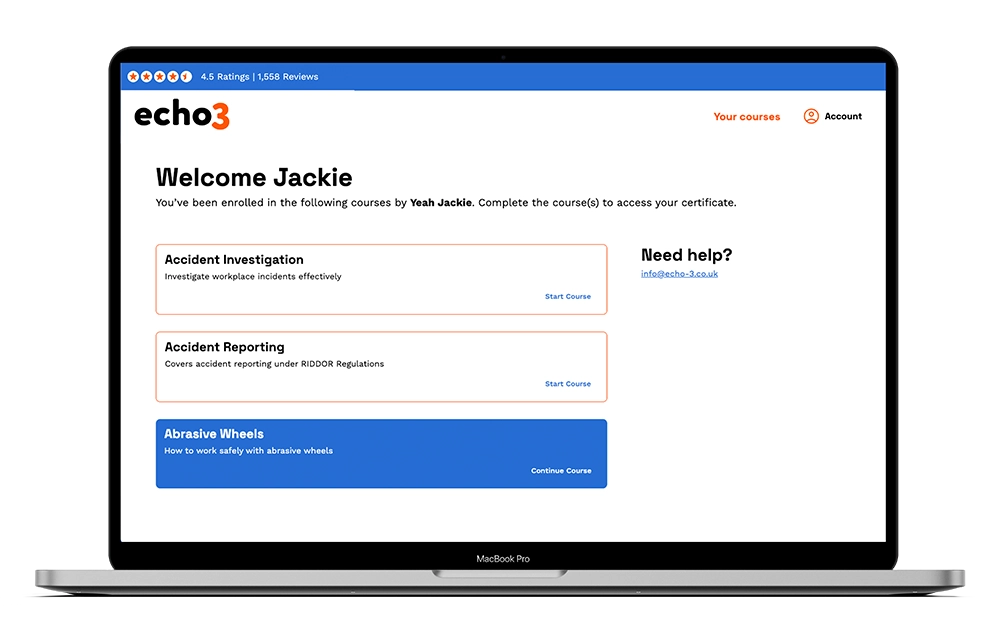
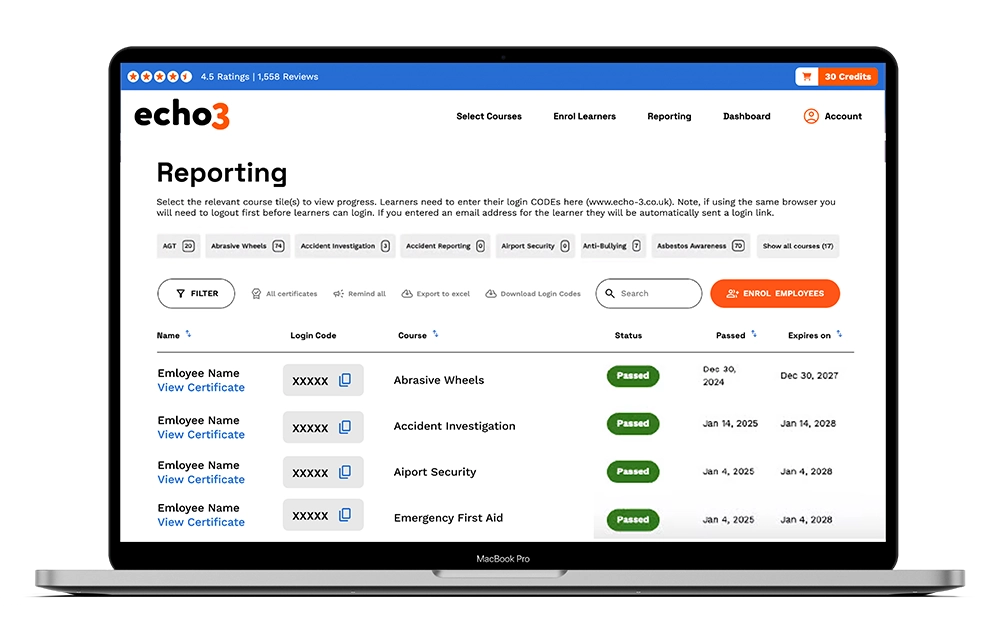
- Learner dashboard included
- Instant access after payment
- Free course retakes
- Shareable digital certificate




Our Preventing Sexual Harassment at Work online course provides employees with the knowledge they need to recognise, prevent and report sexual harassment at work. Designed for UK organisations, the course explains what sexual harassment is, the impact it has on individuals and businesses, and the responsibilities everyone shares in creating a respectful, safe and inclusive workplace.
The training also covers the responsibilities under the Employer Rights Act (2025). This course employers need legal requirements by demonstrating they are taking proactive steps to prevent workplace sexual harassment while promoting a positive workplace culture.
Every employee has the right to work in an environment free from sexual harassment. Unacceptable behaviour can affect wellbeing, productivity and morale, while exposing organisations to legal claims, financial penalties and reputational damage.
This online sexual harassment training helps employees understand what constitutes unlawful behaviour, recognise the difference between workplace banter and harassment, identify inappropriate conduct early, and know how to report concerns confidently. By increasing awareness across the workforce, employers can reduce risk and help create a culture built on dignity, equality and respect.
From 26 October 2024, the Worker Protection (Amendment of Equality Act 2010) Act 2023 introduced a new legal duty requiring employers to take reasonable steps to prevent sexual harassment in the workplace.
Rather than simply responding to complaints after they occur, employers are now expected to take proactive measures to reduce the risk of harassment. This includes implementing effective policies, encouraging reporting, reviewing workplace risks and providing regular sexual harassment training to employees.
Where an employer cannot demonstrate they have taken reasonable steps, an Employment Tribunal may increase compensation awarded to a successful claimant by up to 25%. Regular employee training is therefore an important part of demonstrating compliance with the new legal duty.
This online sexual harassment course is suitable for employees in every industry, including offices, retail, healthcare, hospitality, education, manufacturing, construction and remote or hybrid workplaces. It is appropriate for anyone who needs to understand acceptable workplace behaviour, recognise sexual harassment and contribute to a safe, respectful working environment.
The Echo3 Preventing Sexual Harassment in the Workplace course is completed entirely online in approximately 60 minutes, allowing learners to study at their own pace.
The course covers the UK legal framework, employer and employee responsibilities, recognising different forms of sexual harassment, workplace behaviour standards, remote and hybrid working, digital communications, third-party harassment, reporting concerns, investigations, protection from victimisation and practical measures for preventing harassment in the workplace.
Learners complete a 10-question multiple-choice assessment at the end of the course and receive a certificate upon successful completion.
The Echo3 online Preventing Sexual Harassment in the Workplace course is available on any internet-connected device, enabling employees to complete their training anytime, anywhere and at their own pace.
This flexible approach makes online sexual harassment training an affordable solution for organisations of all sizes. It helps employers meet their legal responsibilities, demonstrate compliance with the latest UK legislation and build a workplace where employees feel safe, respected and supported.
Echo3 also offers a comprehensive range of online health and safety, compliance and workplace training courses to help organisations maintain compliance and develop a positive workplace culture.
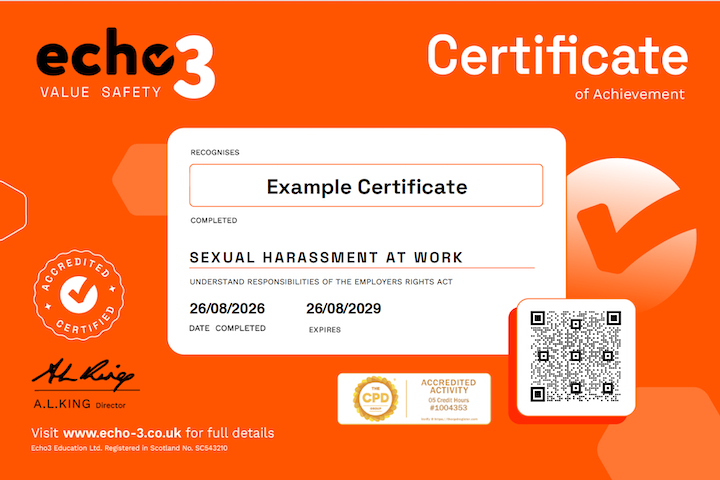
A CPD accredited certificate, emailed the moment you pass. Employers, agencies and auditors scan the QR code to check it on the spot.
Written in accordance with the Employment Rights Act 2025, the Worker Protection (Amendment of Equality Act 2010) Act 2023 and the Equality Act 2010. Last updated July 2026.
Get Certified · £15.00 + VATSexual harassment is unwanted conduct of a sexual nature that has the purpose or effect of violating someone’s dignity or creating an intimidating, hostile, degrading, humiliating or offensive environment.
It can include sexual comments, jokes, questions, gestures, touching, unwanted advances, messages, images or other inappropriate behaviour. Sexual harassment can happen face-to-face or through emails, messaging apps, social media, video calls and other digital communications.
Yes. Sexual harassment is unlawful under the Equality Act 2010. Since 26 October 2024, employers have had a legal duty to take reasonable steps to prevent sexual harassment of workers. From 30 October 2026, this duty is strengthened, requiring employers to take all reasonable steps to prevent sexual harassment in the workplace.
It can. Calling inappropriate behaviour “banter” does not automatically make it acceptable. Sexual jokes, comments or behaviour may amount to sexual harassment if they are unwanted and have the purpose or effect of violating someone’s dignity or creating an intimidating, hostile, degrading, humiliating or offensive environment. Employees should not assume that behaviour is acceptable simply because it was intended as a joke.
Yes. Sexual harassment can happen anywhere work-related activity takes place, including through emails, messaging platforms, social media, video calls and other digital communications. Remote and hybrid workers should maintain the same standards of professional and respectful behaviour when working online as they would in the workplace.
Sexual harassment training helps employees recognise inappropriate behaviour, understand what sexual harassment is and know how to respond and report concerns.
It also helps employees understand their responsibilities and the standards expected in the workplace. For employers, employee training is an important part of a wider approach to preventing sexual harassment and demonstrating that appropriate preventative steps have been taken.
There is currently no general legal requirement for every employee in the UK to complete a specific sexual harassment training course. However, employers have a legal duty to take reasonable steps to prevent sexual harassment in the workplace. From 30 October 2026, this duty was strengthened, requiring employers to take all reasonable steps to prevent sexual harassment.
Providing employees with appropriate sexual harassment training is an important way for employers to meet this preventative duty. Training helps employees understand unacceptable behaviour, recognise sexual harassment, know how to report concerns and understand their responsibilities in maintaining a respectful workplace.
This Sexual Harassment At Work course focuses specifically on recognising, preventing and responding to sexual harassment in the workplace. It covers the legal definition of sexual harassment, inappropriate sexual behaviour, workplace banter, reporting concerns, third-party harassment, victimisation and the employer’s legal duty to take reasonable steps to prevent sexual harassment.
A Dignity at Work course has a broader scope. It covers respectful workplace behaviour and wider issues relating to equality, discrimination, harassment and victimisation under the Equality Act 2010. It can therefore address a wider range of inappropriate workplace behaviour, including discrimination relating to protected characteristics such as sex, race, disability, age, religion or belief, sexual orientation and gender reassignment.
Organisations may choose one or both depending on their training requirements.





 Guaranteed Safe & Secure checkout managed by Stripe & Paypal








Have any questions about our training or services?
Email us at info@echo-3.co.uk today!
Get in touch