• Safety Courses
  • Digital Certificate
  • Fully Accredited
  • LMS Included
Courses for Kitchen Porters

Health and Safety Training for Kitchen Porters

A kitchen porter keeps the kitchen running: washing up, cleaning down, moving deliveries and taking out waste, around hot water, strong chemicals and wet floors.

These are the four essential courses for every kitchen porter. Buy them together as the Kitchen Porter Bundle at a discounted price.

Instant access after payment Free retakes QR-verified certificate

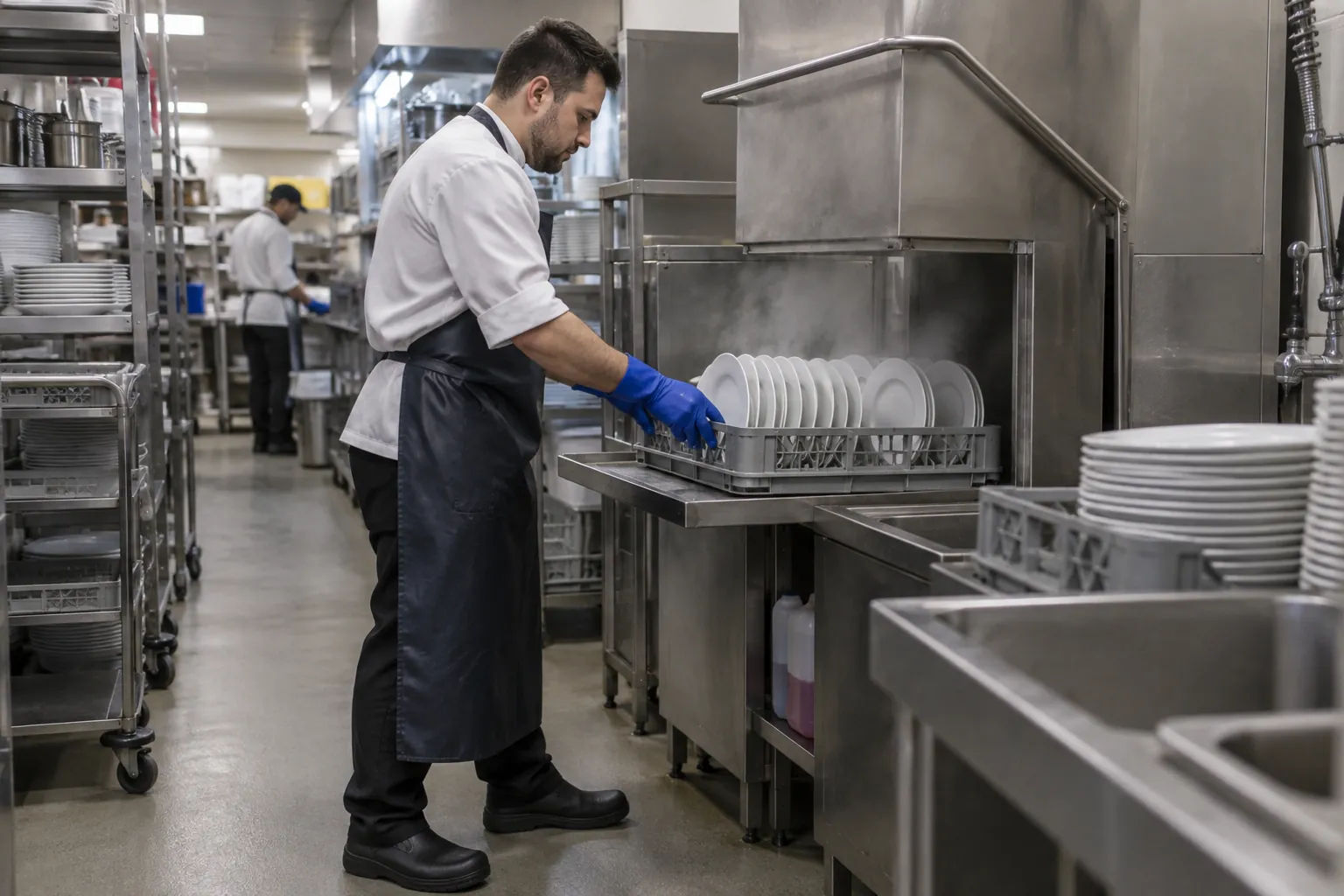
A kitchen porter in a waterproof apron, rubber gloves and non-slip shoes loading a rack of plates into a commercial dishwasher
Health and safety in the kitchen

The Hazards a Kitchen Porter Works With Every Shift

Kitchen porter training follows the work. These four hazards come with the job in every kitchen, and each one has a course in the Kitchen Porter Bundle.

Food Hygiene

Kitchen porters handle the plates, pans and surfaces that food touches, and often put away deliveries. Food businesses must make sure everyone who handles food is supervised and trained to a level that matches their work, and Level 1 suits staff with limited contact with open food.

Covered by Food Hygiene Level 1

Cleaning Chemicals

Dishwasher detergent, degreasers, oven cleaner and sanitiser are hazardous substances under the COSHH Regulations 2002. Porters need to know how to use them, what protection to wear and what never to mix.

Covered by COSHH Course

Heavy Lifting

Stacks of plates, full stockpots, delivery crates and waste bins all count under the Manual Handling Operations Regulations 1992. Employers must reduce the risk, and porters need to know how to lift and carry safely.

Covered by Manual Handling Training

Wet Floors

The wash-up area is one of the wettest parts of any kitchen, and HSE names kitchen assistants among the staff most affected by slips and trips in catering. The Workplace (Health, Safety and Welfare) Regulations 1992 require floors kept free of slip hazards so far as is reasonably practicable.

Covered by Preventing Slips and Trips Course
Kitchen Porter Bundle

What Training Do Kitchen Porters Need?

The kitchen porter training every new starter needs, in four succinct courses. Each one ends with a QR-verified certificate, emailed the moment you pass.

Kitchen Porter Bundle

All 4 Courses, Discounted

The saving comes off at checkout when every course in the bundle is in your basket. Training a team? Add a seat of each course per person and every complete set is discounted. Spend £250 or more before VAT and our bulk discount applies instead, whichever saves you more.

£42.00 £38.00 + VAT

£45.60 inc. VAT

You save £4.00

Our customers say
“The course had good, relevant content, exactly what we needed. Online access to suit our schedule was very good, with the certificate available immediately on successful completion.”
— Verified customer
“The course was well-structured, easy to navigate, and delivered essential information in a clear and engaging manner. The content was comprehensive and well paced.”
— Verified customer

Kitchen Porter Training FAQs

What training does a kitchen porter need?

A kitchen porter needs basic food hygiene training, plus health and safety training for the cleaning chemicals, lifting and wet floors that come with the job. The Kitchen Porter Bundle covers all four with Food Hygiene Level 1, the COSHH Course, Manual Handling Training and the Preventing Slips and Trips Course.

Do kitchen porters need a food hygiene certificate?

No law requires a certificate, but food businesses must make sure everyone who handles food is supervised and instructed or trained in food hygiene to a level that matches their work. A certificate is the clearest way to show that training has happened, which is why most kitchens ask porters for one.

Should a kitchen porter take Level 1 or Level 2 food hygiene?

Food Hygiene Level 1 suits porters who mainly wash up, clean and put away wrapped or packaged food. If you also help with food preparation, take Food Hygiene Level 2, the level kitchens expect from anyone handling open food.

Do kitchen porters need COSHH training?

Yes, if they use hazardous cleaning products, and almost every porter does. The COSHH Regulations 2002 require employers to give staff suitable information, instruction and training on the hazardous substances they work with. The COSHH Course covers how to handle them, what protection to wear and what to do if something goes wrong.

How does the bundle discount work?

Add all four courses to your basket and the bundle saving comes off at checkout. You can still buy any course on its own at its normal price. If you are buying for a team and your basket comes to £250 or more before VAT, our bulk discount applies instead, whichever saves you more.

Can I buy the Kitchen Porter Bundle for my whole kitchen team?

Yes. Add a seat of each course per porter and every complete set is discounted. You will get a manager dashboard to enrol your team, follow their progress and download their certificates. See Train Your Team for how it works.

What if I don't pass first time?

Each course ends with a short multiple-choice assessment, marked straight away. If you don’t pass first time you retake it, free, as many times as you need.

Shift Ready
Certified Today

Four courses, one basket, one discounted price. Work through them at your own pace and download each certificate the moment you pass.

Get the Kitchen Porter Bundle

Instant access Free retakes Money-back guarantee QR-verifiable certificate